Condensate atomiser - how to protect it over winter
Does a condensate atomiser need to be removed for winter? We explain the key technical points and show you how to prepare the Wipcool P08J and P15J for frost in a few simple steps.

In the HVAC industry, autumn is a busy time for preparing equipment for the heating season. Because proper maintenance ensures trouble-free operation of systems over the coming months, a thorough technical inspection is worthwhile. One of the devices that needs proper attention before frost arrives is the condensate atomiser (models P08J and P15J).
How do you protect these units correctly over winter? Above all, the right steps help you avoid costly failures in spring and significantly extend their service life. Here are the key rules that every service engineer and user must remember.
Operating at low temperatures - the key parameter is 0°C
Condensate atomisers are designed to evaporate condensate efficiently within a specific ambient temperature range - from 0°C to 50°C.
Therefore, when temperatures fall below 0°C, you must stop using the unit. Because water freezing inside the system expands, it can damage the nozzles, the pump and the internal pipes. As a result, during winter the condensate atomiser must remain switched off until outdoor temperatures are consistently above zero again.
Does the unit need to be removed for winter?
This is one of the most frequently asked questions. Fortunately, the answer is short: no, removal is not required.
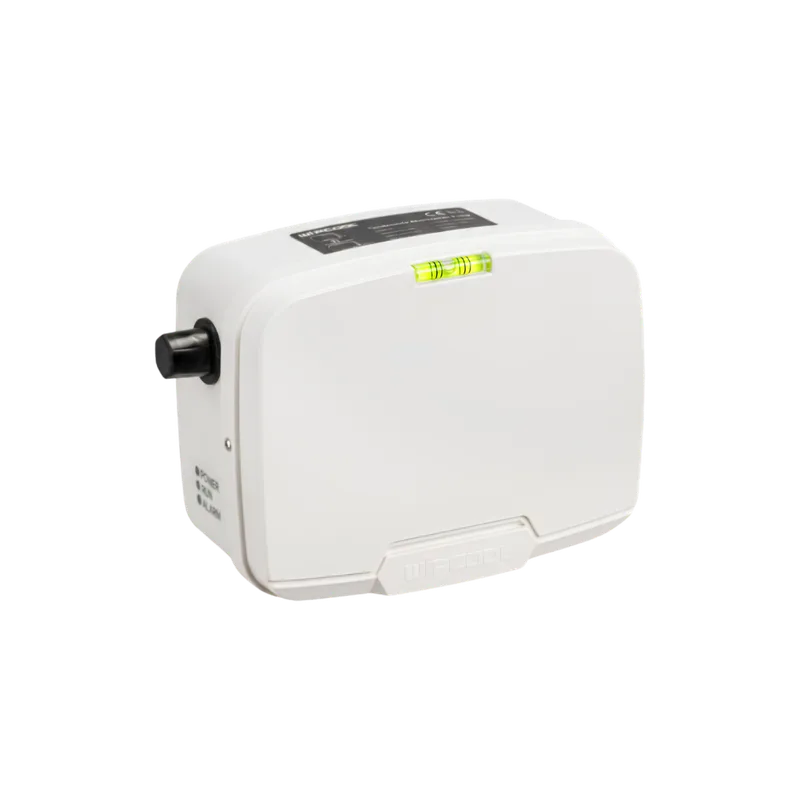
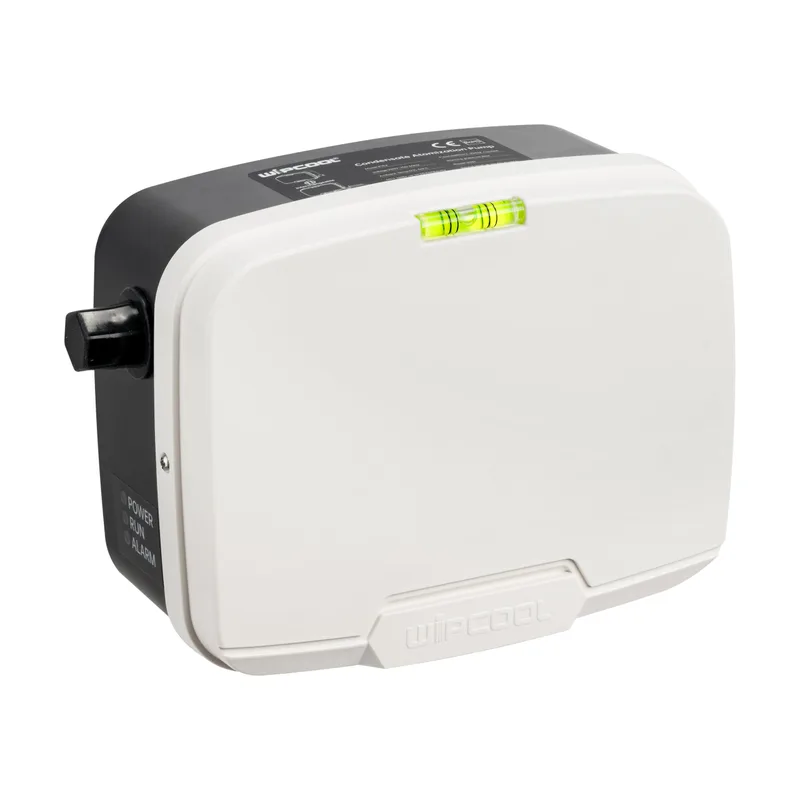
The design and housing of the Wipcool P08J and P15J withstand harsh weather conditions very well. For this reason, the condensate atomiser can safely remain on the building wall or an outdoor bracket throughout the winter. This means you do not have to take it off the wall, disconnect the entire installation or find a place for it inside the building.
Winter preparation in practice - essential service steps
However, not having to remove the unit does not mean doing nothing. Before the first frosts arrive, carry out a short maintenance check, which takes only a few minutes:
- Draining the system: the most important task is to remove all remaining water and condensate from the entire system (tank, pump, and inlet and outlet pipes). With no standing water left, the risk of ice bursting components is completely eliminated.
- Checking nozzles and pipes for blockages: before switching off, also check that deposits or scale have not blocked the atomising nozzles. Flush them thoroughly so that the condensate atomiser runs at full capacity straight away in spring.
- Checking the technical condition: finally, check the connections for leaks and make sure the housing has no mechanical damage.
Summary - the key points at a glance
- Operating temperature range: from 0°C to 50°C.
- Operation strictly prohibited: do not use the unit at temperatures below 0°C.
- No removal required: the atomiser can safely stay outdoors over winter.
- Key task: you must drain all remaining water from the system before frost.
- Prevention: checking nozzles and pipes for blockages ensures a trouble-free start to the new season.
Simple pre-winter maintenance ensures that in spring your Wipcool condensate atomiser (P08J, P15J) gets straight back to efficient operation, without unpleasant technical surprises or unnecessary service costs.