Why clean an air conditioner? Steam cleaner or pressure washer and coil cleaner?
A dirty coil means weaker cooling, higher electricity bills and an unpleasant smell from the air outlet. Air conditioners are cleaned with steam or with pressurised water and a coil cleaner. We explain how these methods differ, when to choose each one and what equipment you need.

- A clean coil delivers full cooling capacity, and no dust or musty smell comes from the air outlet.
- Steam disinfects and dissolves greasy deposits without chemicals, while pressurised water with a coil cleaner removes heavy dirt fastest.
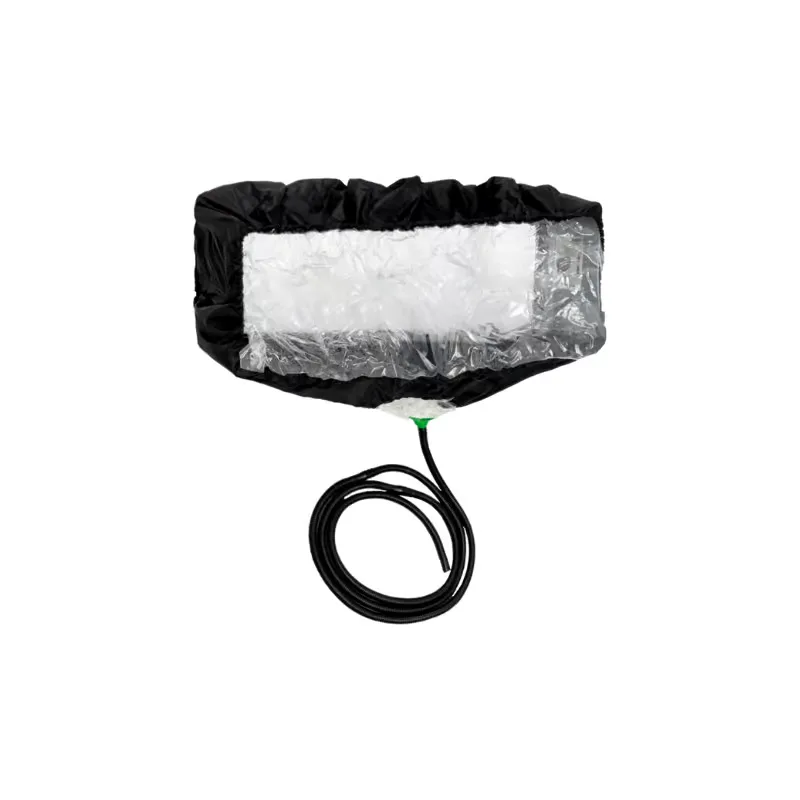
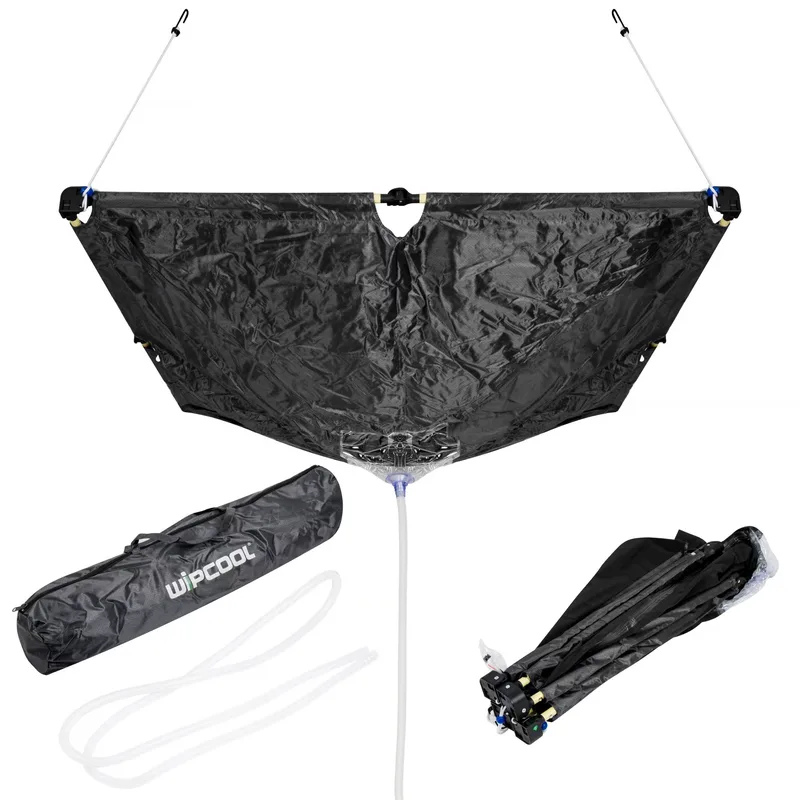
- The indoor unit is cleaned inside an AC cleaning cover, which drains the dirty water into a bucket.
Why clean an air conditioner
Room air passes through the filter and the indoor unit coil. The filter traps coarser dust, but over time fine dust, kitchen grease and moisture build up on the evaporator fins and in the fan, and bacteria and mould grow in that moisture. The outdoor unit collects leaves, pollen and dirt from the street.
- Weaker cooling and heating - a dirty coil transfers heat less efficiently, so the compressor runs longer and uses more electricity.
- Smell from the air outlet - deposits on the evaporator and in the condensate tray cause a musty smell.
- Dripping water - dirt blocks the condensate drain and water starts dripping from the unit.
- Shorter service life - an overheating compressor and a dirty fan wear out faster.
In homes, an air conditioner is usually cleaned once a year, before the season. In kitchens, surgeries, shops and busy offices it needs cleaning more often - even every few months.
Steam cleaning
Steam at 130–150 °C dissolves greasy deposits and disinfects the coil without chemicals. It reaches between the fins and into the recesses of the fan, and uses little water. It works well on indoor units in flats, surgeries and anywhere no chemical smell should remain after cleaning.
Heavy dust and leaves in the outdoor unit condenser are removed faster with pressurised water.
Pressure washer and coil cleaner
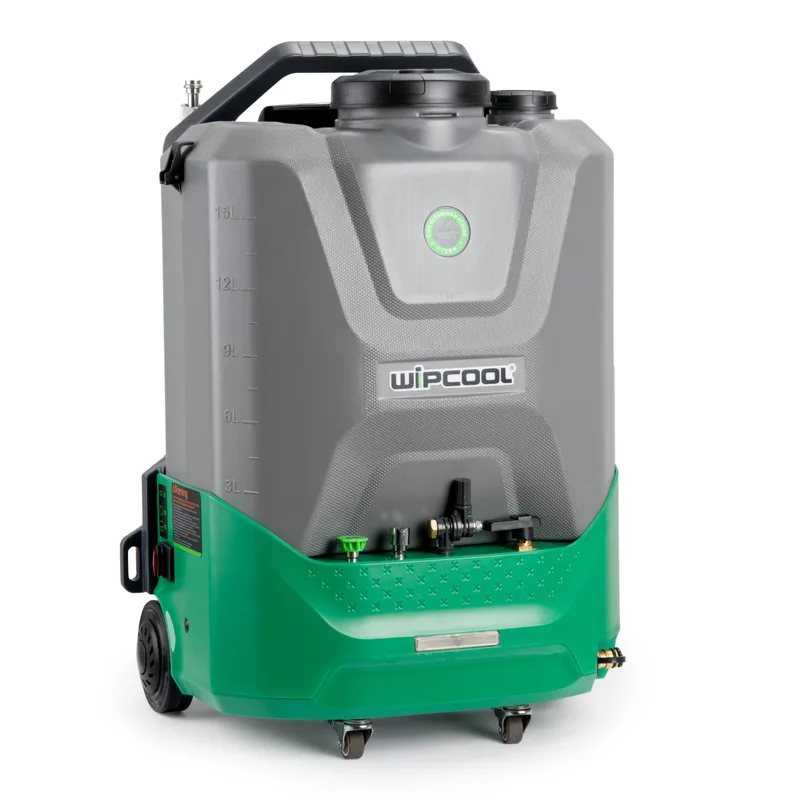
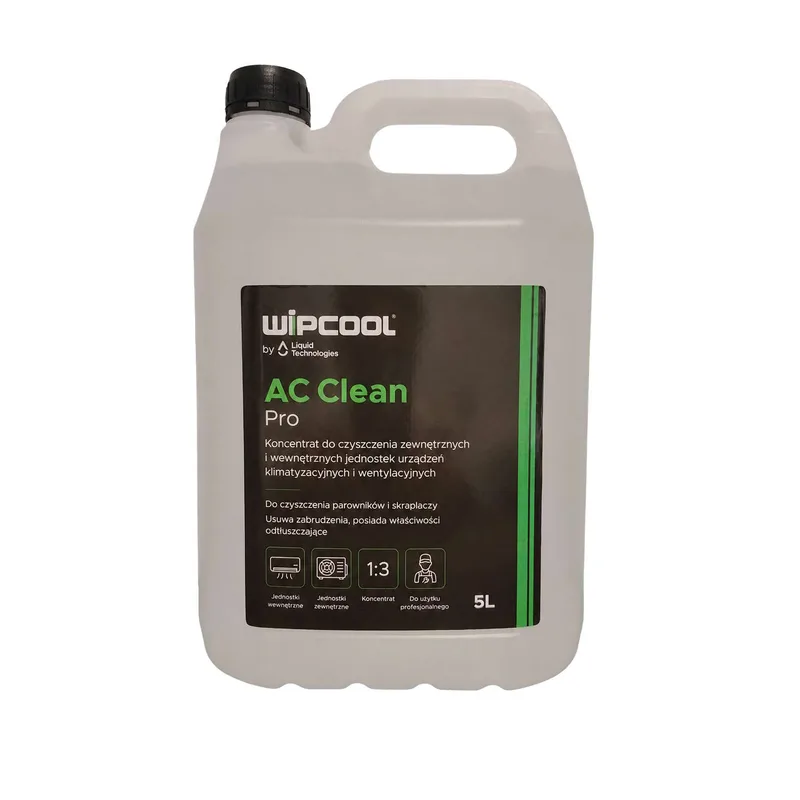
The coil cleaner is applied to the coil and, after a few minutes, the dissolved dirt is rinsed off with water from the pressure washer. This is the fastest way to deal with heavy deposits in the outdoor unit condenser and, in the indoor unit, with a heavily soiled evaporator and fan.
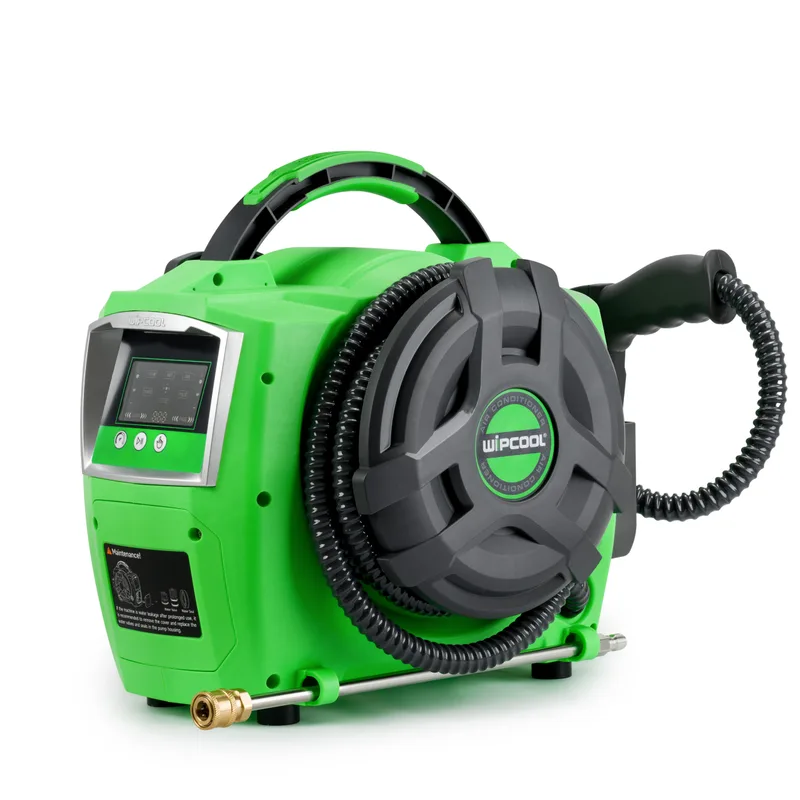
Low pressure is enough for the fins: AC pressure washers have 3–5 bar and 7–10 bar modes, and larger models offer stepless adjustment. Direct the jet along the fins so that you do not bend them.
The indoor unit is cleaned inside an AC cleaning cover, e.g. the CSC-1 for wall-mounted units. The cover encloses the unit and the dirty water drains through a hose into a bucket, so the wall and floor stay dry.
Before cleaning, switch off the power supply to the air conditioner and cover the PCB.
Steam and pressurised water - comparison
Which method and equipment to choose
| Situation | Method | Wipcool equipment |
|---|---|---|
| Indoor unit at home, cleaning every season | steam or low-pressure water | C30S, C10 with cover |
| Kitchen, surgery, office - grease and bacteria | steam and disinfection | C30S, C35S with cover |
| Outdoor unit, condenser with leaves and dust | pressurised water and coil cleaner | C10B, C28B, C28T |
| No mains socket or tap, roof, loft | cordless pressure washer with tank | C10BW |
| Large coils, VRF systems, chillers | higher-pressure water, foam | C40T, C110T |
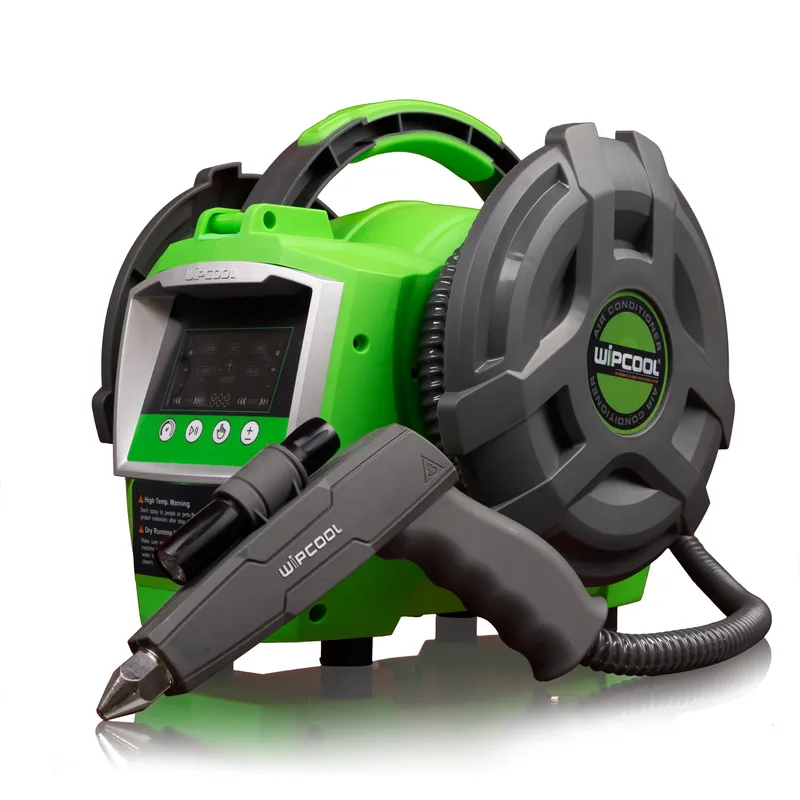
The C30S and C35S pressure washers with steam function combine both methods: they have a pressurised water mode and a steam mode, so you can clean and disinfect the coil with one machine.
After cleaning, check that the condensate drain is clear, and wash or replace the filters.
Answer a few questions and the product selector will recommend a pressure washer for your units.