Vacuum pump oil - which to choose and when to change it
The oil in a vacuum pump seals and lubricates it. Its condition determines whether the pump can reach a deep vacuum when you dry out a system. We explain how vacuum pump oils differ, how to tell when the oil needs changing and how to check the result of an oil change.

- Vacuum pumps use mineral oil with a viscosity matched to the specific pump, not engine oil or compressor oil.
- Change the oil when it is cloudy or dark, or when the pump no longer reaches the vacuum measured with a vacuum gauge.
- Change the oil while the pump is warm and fill it to a level between the minimum and maximum marks on the sight glass.
Why a vacuum pump needs oil
In a service vacuum pump, the oil seals the clearances between the pump components, lubricates them and carries away heat. During evacuation, the pump draws in air, moisture and residual refrigerant, and some of these contaminants remain in the oil. The more contaminated and moisture-laden the oil, the less effectively it seals the pump and the poorer the vacuum it achieves at the service valves. This is why the oil condition is one of the first things to check when the pump stops pulling down.
Which oil to choose
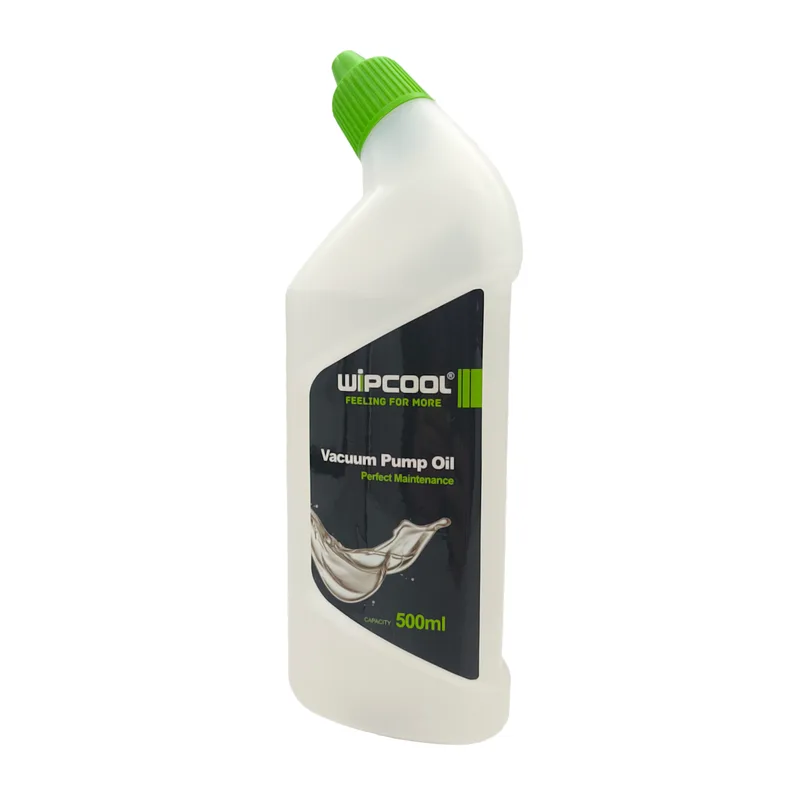
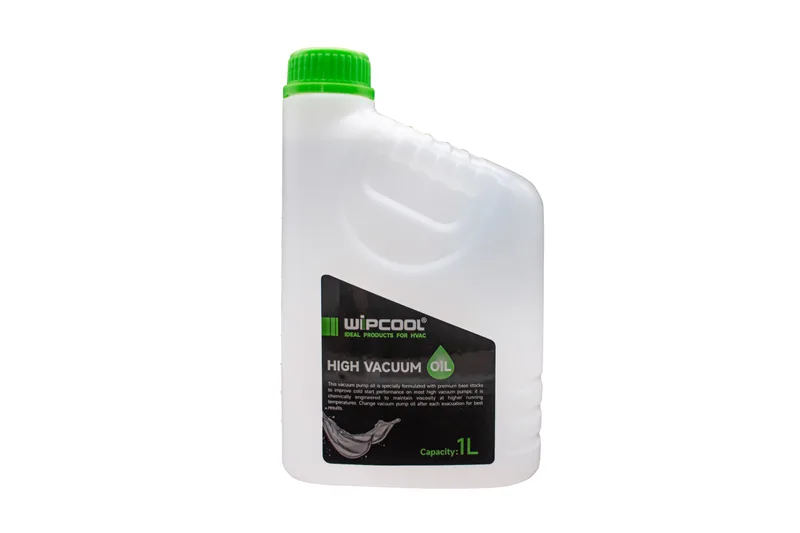
Vacuum pumps require a dedicated oil, not ordinary engine oil or compressor oil. The Wipcool range consists of mineral oils. WPO-1 and WPO-2 are the same refined oil without detergent additives, with a kinematic viscosity of 41.4–50.6 mm²/s at 40 °C. They differ only in bottle size: 500 ml or 1 l. WPO-3 is an oil intended exclusively for the 2F10 industrial vacuum pump. Its viscosity is considerably higher: 90–110 mm²/s at 40 °C.
When choosing an oil, what matters most is the viscosity recommended by the pump manufacturer. Oil of the wrong viscosity seals the pump less effectively or makes it harder to start. Check the oil compatibility with a specific pump model in its documentation.
| Parameter | WPO-1 | WPO-2 | WPO-3 |
|---|---|---|---|
| Capacity | 500 ml | 1 l | 1 l |
| Oil type | mineral, non-detergent | mineral, non-detergent | mineral |
| Kinematic viscosity (40 °C) | 41.4–50.6 mm²/s | 41.4–50.6 mm²/s | 90–110 mm²/s |
| Viscosity index | 100 | 100 | 105 |
| Flash point | 225 °C | 225 °C | 268 °C |
| Pour point | -10 °C | -10 °C | -16 °C |
| Compatible equipment | vacuum pumps | vacuum pumps | 2F10 vacuum pump |
When to change the oil
Pump oil does not wear out by the calendar - what matters is how much moisture and contamination the pump has drawn in. After drying out a heavily moisture-laden system, the oil may need changing after a single evacuation, while in routine work it will last many hours. This is why you assess the oil condition at the sight glass before each evacuation, not once a season. Signs that it is time for an oil change:
- The oil has turned cloudy or milky white - this is water from the system emulsified with the oil.
- The oil has darkened, thickened or has an acidic smell.
- Sediment or particles of contamination are visible at the bottom of the sight glass.
- The pump no longer reaches the same vacuum as before, even though the hoses and the system are leak-tight.
- Change the oil while the pump is warm
Ideally straight after use. Warm oil is thinner and drains out together with the contaminants instead of remaining at the bottom.
- Disconnect the pump from the power supply
Do this before you unscrew anything. The pump and the oil are hot at this point, so also protect your hands.
- Drain the old oil
Open the drain plug and wait until the oil stops dripping. Then refit the plug.
- Fill with new oil to the correct level
The level must be between the minimum and maximum marks on the sight glass. Too little oil means a poorer pump seal, too much means oil is expelled through the exhaust.
- If the oil is heavily contaminated with moisture, repeat the change
Run the pump for a few minutes with the inlet capped, then drain the fresh oil and refill. A single oil change will not flush out all the moisture.
How to check that the pump reaches a deep vacuum
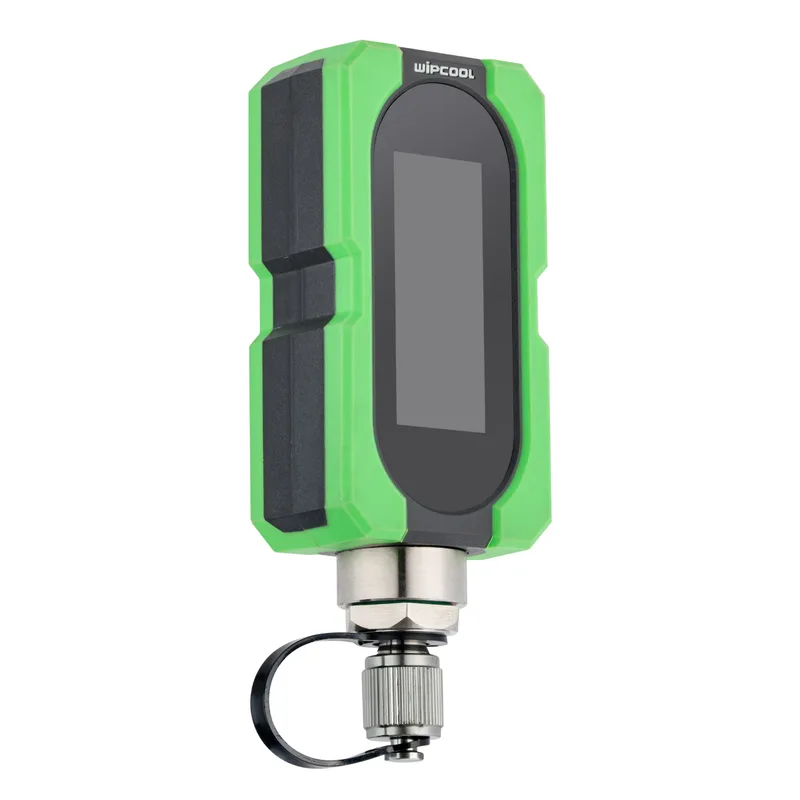
The gauges on a manifold gauge set are not suitable for assessing vacuum - their scale is too coarse for this. You need a vacuum gauge that measures pressure in microns. To check the pump alone, connect the vacuum gauge directly to the pump inlet, cap the remaining ports and start the pump.
A two-stage pump in good condition with fresh oil typically pulls down to 50–150 microns, depending on the model and the condition of the vanes. The reference point is the ultimate vacuum stated by the pump manufacturer, not a round figure from a guide. Bear in mind too that low-cost vacuum gauges can be inaccurate at the lowest readings. If the pump stalls well above its rated ultimate vacuum, the oil is the first suspect.
When drying out a system, connect the vacuum gauge as far from the pump as possible, not at its inlet - otherwise you measure the vacuum in the pump, not in the system. Evacuate to below 500 microns, then close the pump isolation valve and watch the reading. If the pressure rises quickly and does not stabilise, there is moisture left in the system or a leak. Stabilisation at a low level means that the system is dry and leak-tight.