
 Distribution PL · 4REF
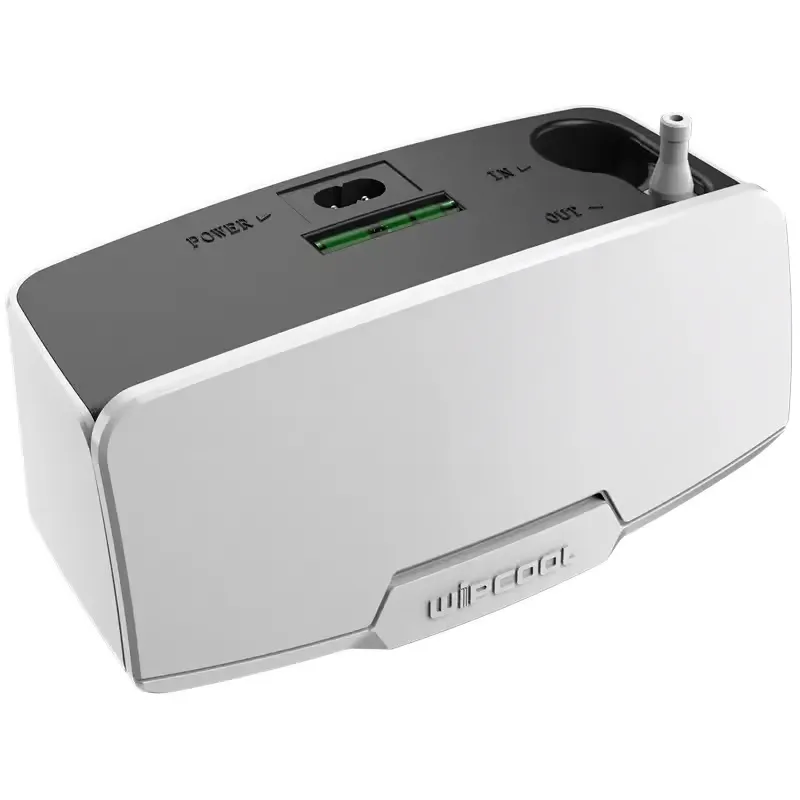
Wipcool P18/P36 user manual
The Wipcool P18 and P36 condensate pumps are used to drain condensate from air conditioners. The indicator on the front cover shows when the pump is running.
The user manual is an integral part of the product. Please read this manual carefully and follow all instructions strictly.
General information
Wipcool products are designed for professional use by qualified air conditioning and refrigeration engineers. As the manufacturer, Wipcool stipulates that our equipment should only be operated by suitably qualified and trained personnel.
- ■Observe all local safety regulations and general safety standards when using the Wipcool P18/P36 condensate pump.
- ■The user manual should be kept near the device so that personnel can access it easily at any time.
- ■Before use, qualified personnel should read the user manual carefully and understand all the instructions it contains.
- ■The manufacturer accepts no liability for any damage resulting from improper use, failure to follow the user manual, lack of personnel qualifications or any unauthorised modifications to the device.
- ■The general terms of sale contained in the sales documents apply.
Symbols and conventions
- 01
 Hazardous voltage - risk of electric shock.
- 02
 Notice - risk of damage to the device or incorrect results.
- 03
 Indicates that the product meets the health, safety and environmental standards applicable in the European Union.
- 04
 Do not dispose of the pump with household waste.
Safety information
- ■Installation and maintenance must only be carried out by qualified personnel.
- ■Do not install a damaged pump.
- ■Route the power cable so that it cannot be damaged during installation.
- ■Secure hose connections with cable ties. Avoid using couplings to join hoses.
- ■Do not place electrical equipment or valuable objects beneath the condensate pump. A power failure or water leak may damage them.
Technical specifications
| Parameter | P18 | P36 |
|---|---|---|
| Power supply | 230 V~ / 50 Hz | 230 V~ / 50 Hz |
| Max. head | 10 m | 10 m |
| Maximum flow rate | 18 l/h | 36 l/h |
| Tank capacity | 150 ml | 150 ml |
| Maximum air conditioner cooling capacity | 8.8 kW | 13.2 kW |
| Noise level at 1 m | 19 dB(A) | 21 dB(A) |
| Operating ambient temperature | 5–50 °C | 5–50 °C |
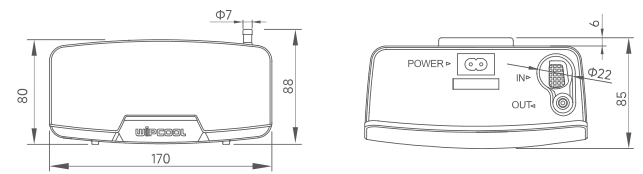
| Device dimensions (L × W × H) | 170 × 85 × 88 mm | 170 × 85 × 88 mm |
| Device weight | 0.43 kg | 0.43 kg |
The pump does not achieve its maximum flow rate and max. head at the same time.
Device diagram
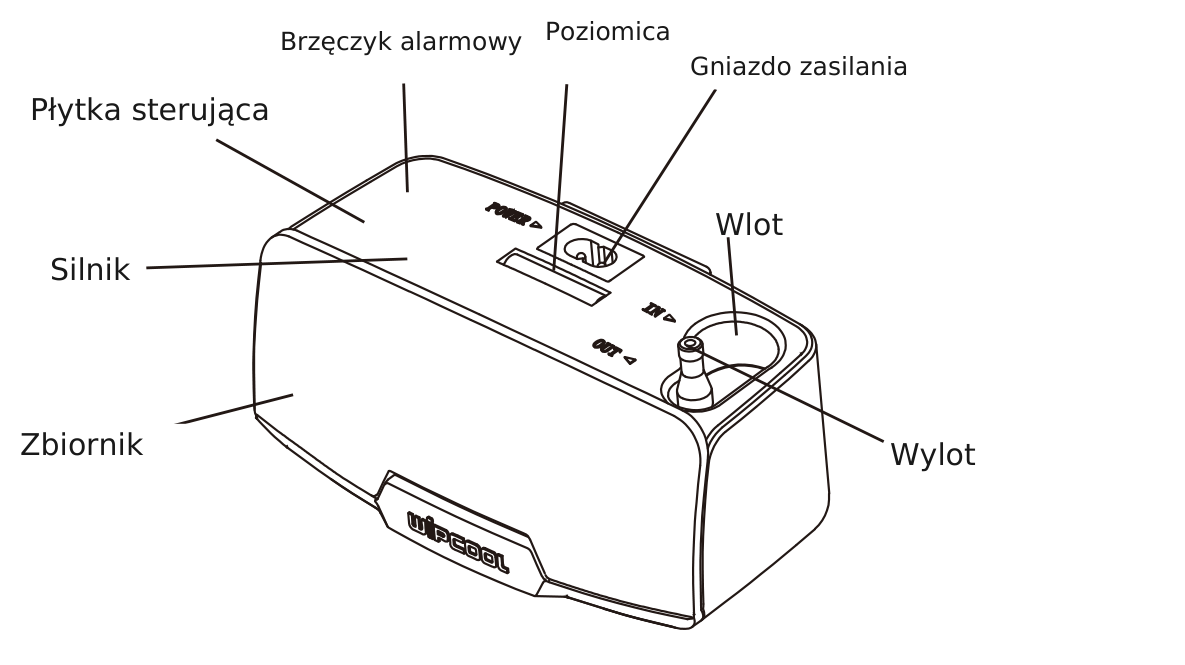
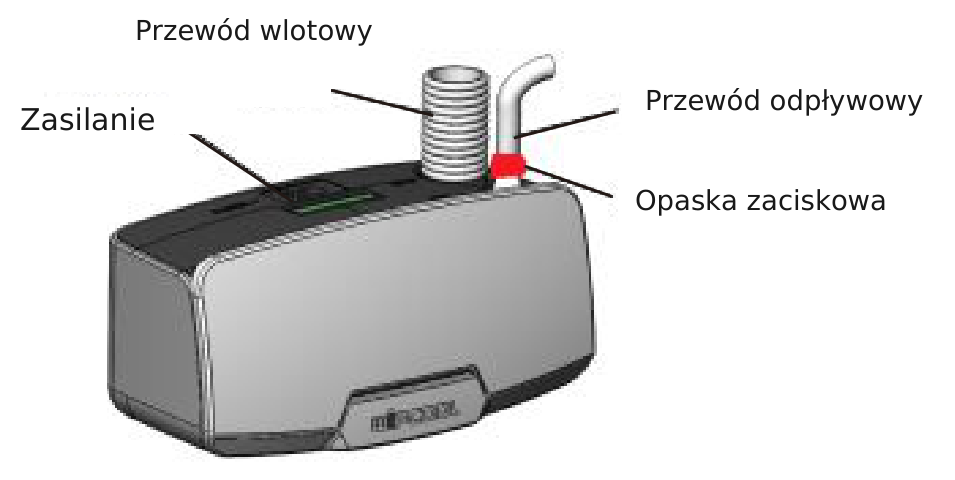
Labels on the housing: POWER - power socket, IN - condensate inlet, OUT - condensate outlet.
Pump dimensions
Contents
After unpacking, check that the contents are complete and in good condition. Report any missing or damaged items to the seller.
- ■P18 or P36 condensate pump.
- ■Filter.
- ■Mounting plate.
- ■4 × 20 mm screws.
- ■Cable ties.
- ■6 × 9 mm drain hose.
- ■Power cable.
- ■User manual.
Transport and storage
- ■Transport the pump in its original packaging. Do not throw it; avoid shocks and strong vibrations.
- ■Protect the pump from moisture, dust and extreme temperatures during transport.
- ■Store the pump horizontally in a dry, well-ventilated place, away from direct sunlight and heat sources.
- ■Storage temperature: 5–50 °C.
Application
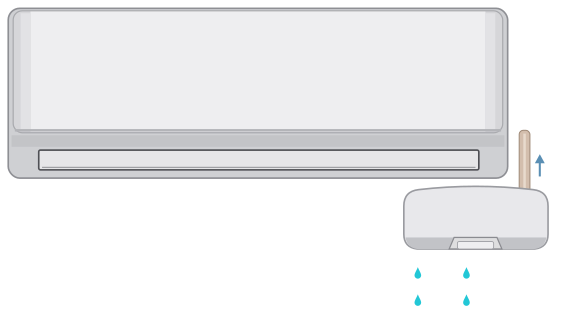
The pumps can be used in domestic and commercial installations. They are designed for horizontal wall mounting.
Installation
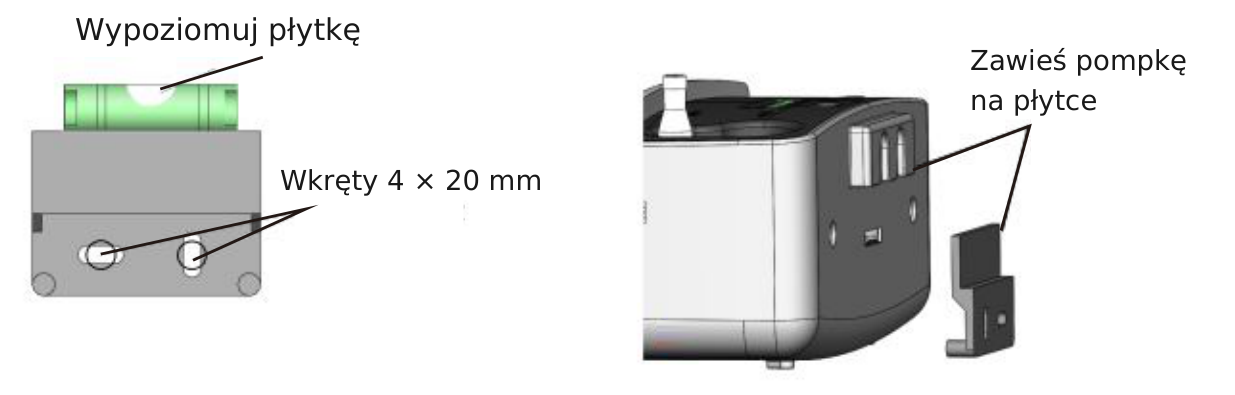
- 01Secure the mounting plate horizontally in a suitable location using the 4 × 20 mm screws, then hang the pump in the groove on the plate.
- 02Check that the spirit level bubble is centred. If the pump is tilted, adjust its position before use.
- 03Connect the inlet hose from the air conditioner's condensate tray to the pump's IN inlet. Connect the 6 × 9 mm drain hose to the OUT outlet and secure the connection with a cable tie.
Connection
Connect the power cable to the pump's POWER socket and the other end to a power supply that remains on when the air conditioner is switched off.
Operation
Operation test
- 01Once the system is correctly connected, make sure the pump is receiving power, start the air conditioner and observe the pump's operation.
- 02If the pump does not operate correctly, switch off the air conditioner and check the table in the ‘TROUBLESHOOTING’ section. If the problem persists, stop using the pump. Have it repaired by a service centre - submit a service request at wipcool.pl/serwis.
Indicators
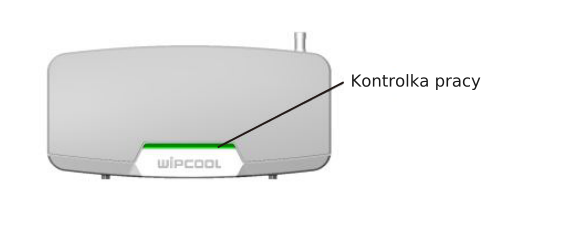
The green indicator on the front cover lights up while the pump is running. When the pump does not drain condensate, the alarm buzzer emits a repeating audible signal.
Maintenance
Inspect and clean the pump before and after the cooling season.
General recommendations
- ■Do not allow water to come into contact with electrical components during cleaning.
- ■Use a mild cleaning agent, such as a small amount of soap, to clean the housing. Do not use alcohol, petrol, solvents, corrosive substances or strong detergents. Chemicals must not enter the pump.
Procedure
- 01Disconnect the inlet hose and the drain hose.
- 02Rinse the tank with clean water.
- 03Reconnect the inlet hose and the drain hose, then reconnect the power supply.
- 04Pour some water into the air conditioner's condensate tray and check that the pump drains the water. Check for leaks and unusual noise.
During air conditioner maintenance
Disconnect the pump from the power supply during air conditioner maintenance. Before reconnecting it, rinse away any chemical residues that could damage the pump.
Troubleshooting
| Problem | Possible cause | Solution |
|---|---|---|
| Pump runs continuously | Pump is not level | Level the pump. |
| Pump gurgles or makes noise after switching off | The end of the drain hose is lower than the pump, causing a siphoning effect | Route the hose so that its end is higher than the pump. |
| Noisy pump operation | Damage to internal components | Have it repaired by a service centre - submit a service request at wipcool.pl/serwis. |
| Pump does not start | Pump is not level | Level the pump and check the water level. |
| Pump does not start | No power to the pump | Check the power connection. |
| Pump does not start | Incorrect voltage | Check the supply voltage. |
| Pump runs but does not drain water | Blocked outlet | Check the outlet and remove any debris. |
| Pump runs but does not drain water | Incorrect pump position | Position the pump horizontally. |
| Water leaks | Damaged drain hose | Check the drain hose and replace it if damaged. |
| Water leaks | Incorrect drain hose connection | Check that the drain hose is correctly connected and secured. |
| Pump switches on and off too frequently | Excessive condensate inflow | Check that the condensate inflow does not exceed the pump's maximum flow rate (P18: 18 l/h, P36: 36 l/h). |
| Pump switches on and off too frequently | Incorrect pump position | Position the pump horizontally. |
| Pump switches on and off too frequently | Deposits in the tank | Rinse the tank with clean water in accordance with the procedure in the ‘MAINTENANCE’ section. |
Waste electrical and electronic equipment
- 01The crossed-out bin symbol means that the end-of-life device must not be disposed of with other waste.
Under applicable regulations on waste electrical and electronic equipment, products marked with the separate collection symbol must not be disposed of with other municipal waste. Because they contain hazardous substances, electronic products that are not collected separately may be dangerous to the environment and human health. Proper separate collection of waste electrical and electronic equipment prevents adverse effects on the environment.
By taking end-of-life equipment to a collection point, the user contributes to its reuse, recycling and recovery.
Recycling - a method of protecting the environment. The process of recovering substances from waste that can be reused as raw materials.
Recovery - the use of waste that has lost its useful value, such as plastics, paper and cardboard, as secondary raw materials; the term is also commonly used to mean destruction.
Information on the waste electrical and electronic equipment collection system
- ■Waste electrical and electronic equipment must not be disposed of with other waste.
- ■The collection of incomplete electrical and electronic equipment and parts from end-of-life equipment is prohibited.
- ■A distributor delivering equipment intended for households to a purchaser must collect household waste equipment free of charge at the place of delivery, provided that the waste equipment is of the same type and performs the same function as the equipment supplied.
- ■The user may hand over end-of-life equipment to a waste equipment collector, a treatment facility or a municipal waste collection operator in the municipality.
- ■Information on collection points is available on the BIP websites of regional marshal offices and city and municipal offices.
Service and documents
Before submitting a request, prepare:
- ■Model - shown on the device's rating plate and on the invoice.
- ■Serial number - if there is none, provide the production number (e.g. 11/2025), usually found on the underside of the device.
- ■Proof of purchase - an invoice or receipt from an authorised distributor.
- ■Description of the fault - what is happening, when it started and under what conditions.
Submit a service request at wipcool.pl/serwis. The warranty terms are also available there.